When designing an industrial solar PV system, the objective is not necessarily to install as many panels as possible on the available roof area.
A more important question is how well solar generation matches the actual electricity demand of the site.
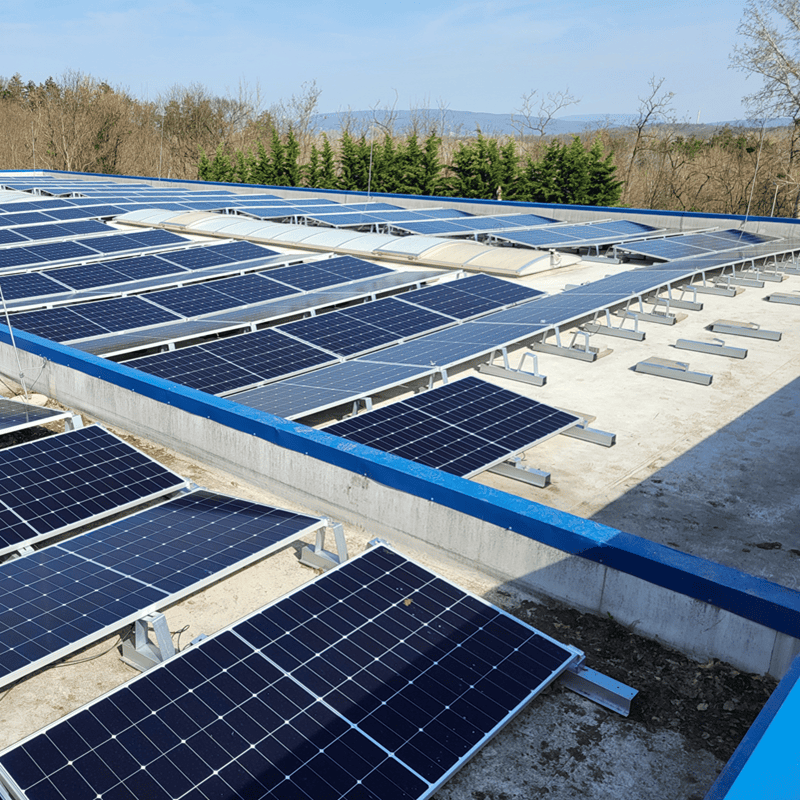
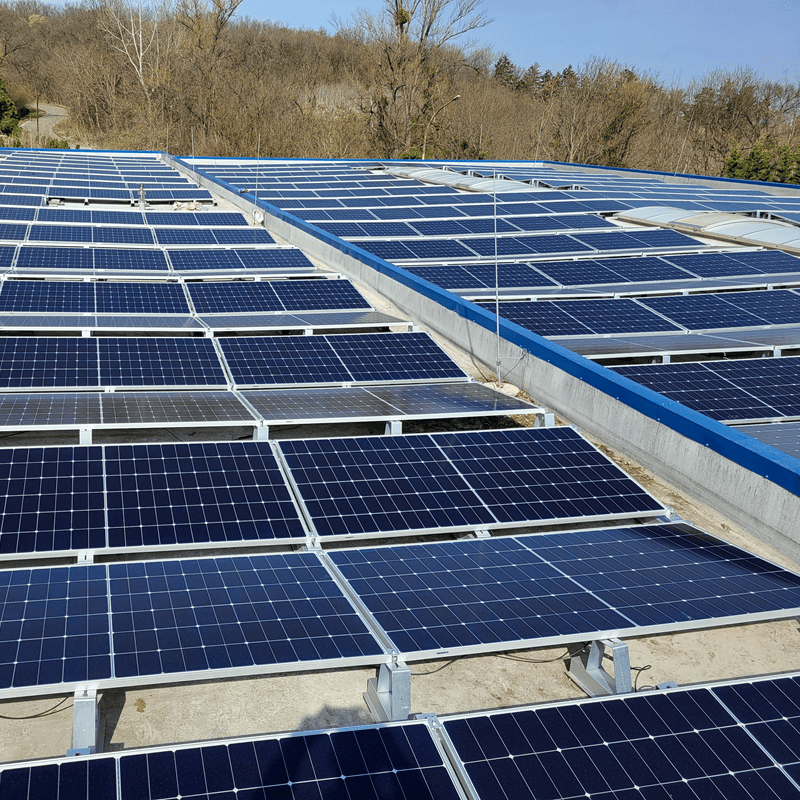
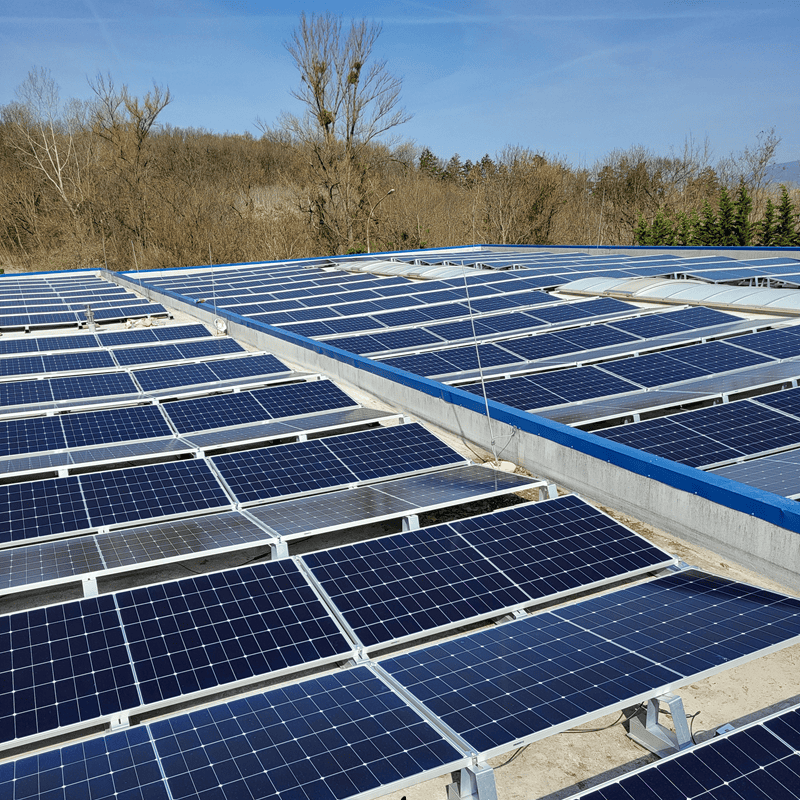
OMS24 Zrt. delivered a 400 kW rooftop solar PV system for a manufacturing facility.
The primary objective was to maximise the proportion of locally generated electricity that could be consumed directly by the facility itself.
The system was therefore designed with zero-export control, allowing generation to be regulated to prevent unwanted export to the public electricity grid.
An estimated 33% of site electricity consumption
The system design was preceded by a simulation of expected solar generation and the site’s electricity consumption.
Based on this analysis, the 400 kW solar PV system is expected to cover approximately 33% of the site’s electricity consumption.
This is an important consideration because the economics of an industrial solar PV system are not determined solely by its installed capacity or total annual generation.
One of the key questions is: how much of the electricity generated can be used directly on site?
Why an east–west orientation?
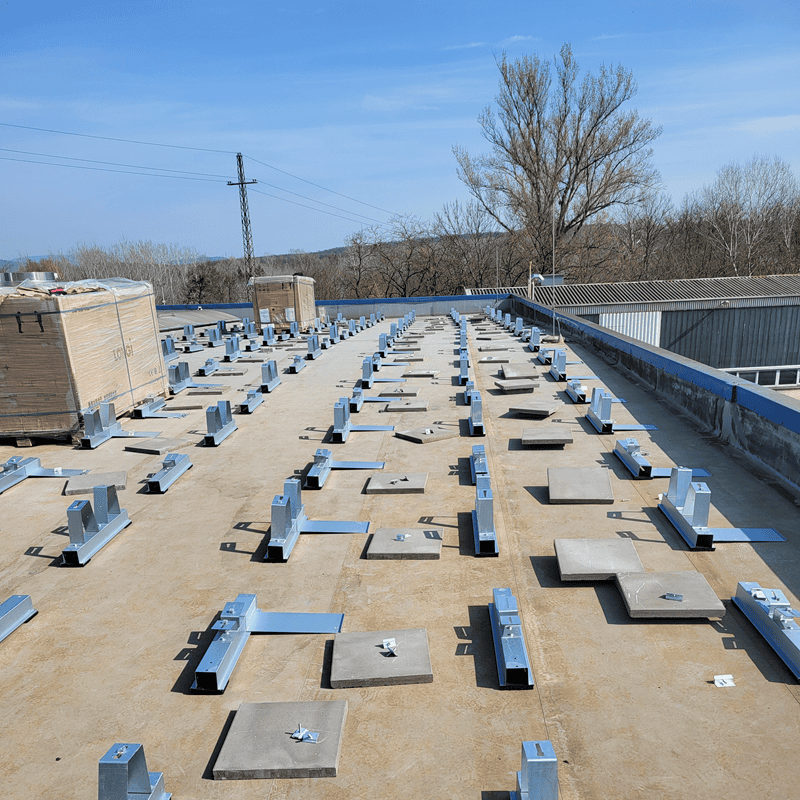
The solar panels were installed in an east–west configuration.
There were two main reasons for this decision.
1. A generation profile that better matches demand
A south-facing solar PV system typically produces a more pronounced generation peak around midday.
With an east–west configuration, generation is spread across a broader part of the day, with useful output beginning earlier in the morning and continuing later into the afternoon.
For a manufacturing facility, this can help the solar generation profile match the site’s electricity demand more closely.
As a result, a greater proportion of the electricity generated can potentially be consumed directly on site.
2. Reduced roof loading requirements
The east–west configuration also provided advantages from a structural perspective.
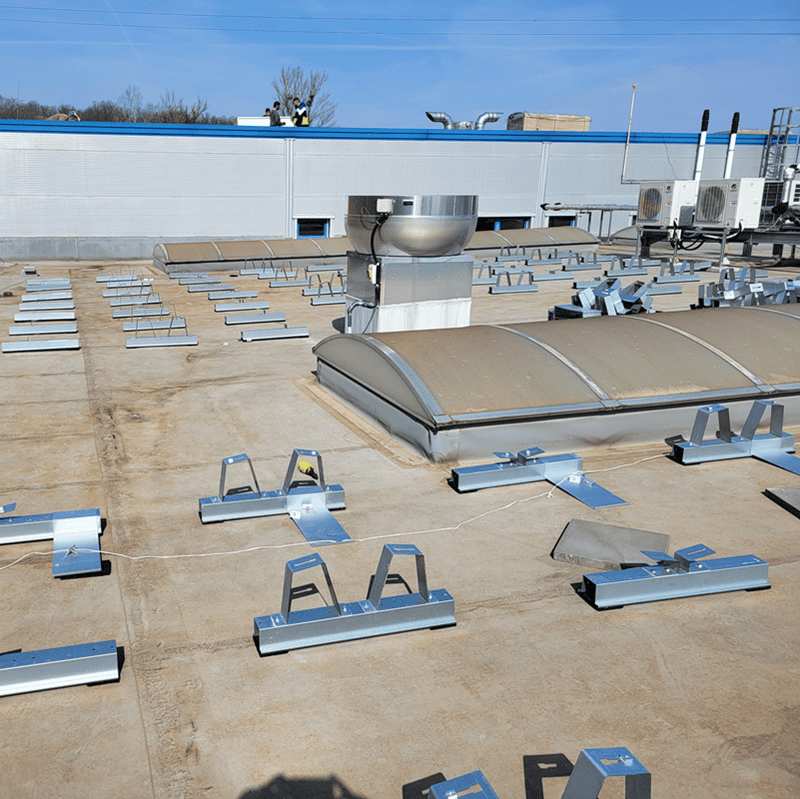
The selected arrangement reduced sensitivity to wind loading, allowing the system to be installed with less ballast.
This had a positive impact on:
- roof loading;
- structural requirements;
- and investment cost.
The orientation was therefore not purely an energy-generation decision.
Energy performance, structural considerations and project economics had to be optimised together.
A 400 kW solar project involves much more than solar panels
For an industrial PV system of this scale, physical installation is only one part of the project.
The grid connection and utility approval process required significant time. In this particular project, the necessary network-related procedures took almost one year.
For larger commercial and industrial solar installations, grid approval and compliance with utility requirements can therefore become a major factor in the overall project schedule.
Medium-voltage supply brings additional requirements
The facility receives electricity through a medium-voltage connection, which resulted in additional technical and control requirements being specified by the distribution network operator.
OMS24 Zrt. was able to meet these additional requirements without creating a disproportionate increase in project cost.
This illustrates why designing an industrial solar PV system involves much more than selecting suitable panels and inverters.
The solution also has to match:
- the site’s electricity demand;
- the existing electrical infrastructure;
- distribution network requirements;
- the structural limitations of the roof;
- and the financial objectives of the investment.
What does this project demonstrate?
The best solar PV system is not necessarily the one that produces the greatest possible amount of electricity.
It is the one that creates the greatest value for the site where it operates.
In this project, that required several factors to be optimised together:
- 400 kW of installed solar PV capacity;
- an estimated 33% reduction in grid-supplied electricity consumption;
- east–west orientation better aligned with the site’s demand profile;
- zero-export control;
- a mounting configuration designed to reduce roof loading;
- and compliance with the additional requirements associated with the medium-voltage connection.
For an industrial solar PV project, the first question should therefore not be how many panels can fit on the roof.
It should be what kind of system best matches the way the site actually operates.