When implementing submetering in an existing building, the project rarely starts with a completely clean slate.
There may already be functioning meters, existing data collection solutions and technical infrastructure that should not be replaced simply because additional metering points are being introduced.
That was exactly the situation in this hotel project.
The objective was to bring a total of 60 three-phase electrical metering points into one unified data collection system.
21 meters were already in operation
Before the project began, 21 submeters were already installed in the hotel’s 0.4 kV main distribution board.
Their data was being collected on a local computer.
The objective was not to remove this existing infrastructure and start again.
The new metering system had to be designed so that the existing meters could remain part of the final solution.
This required:
- consistent communication between existing and new meters;
- appropriate Modbus network architecture;
- correct device addressing and configuration;
- and integration of every metering point into a common data collection environment.
A significant part of the project was therefore not new installation, but the integration of existing and new metering infrastructure.
56 metering points in the main distribution board
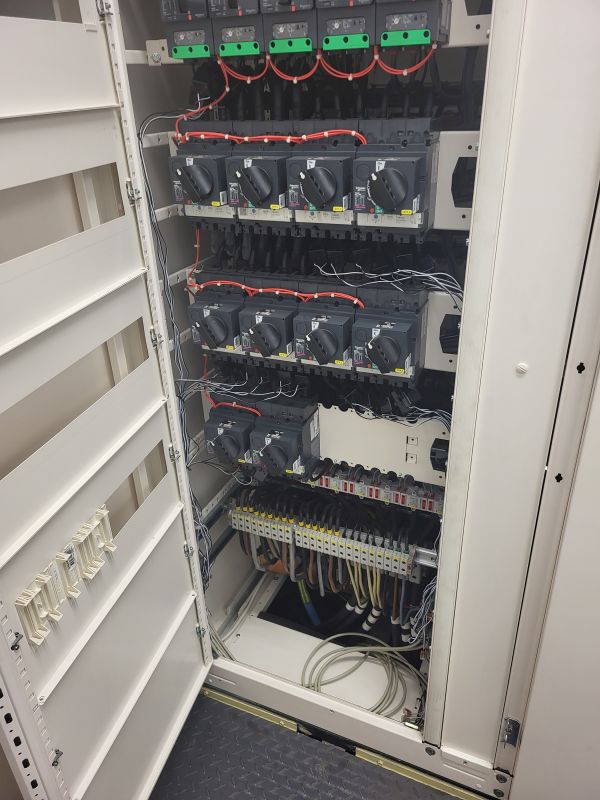
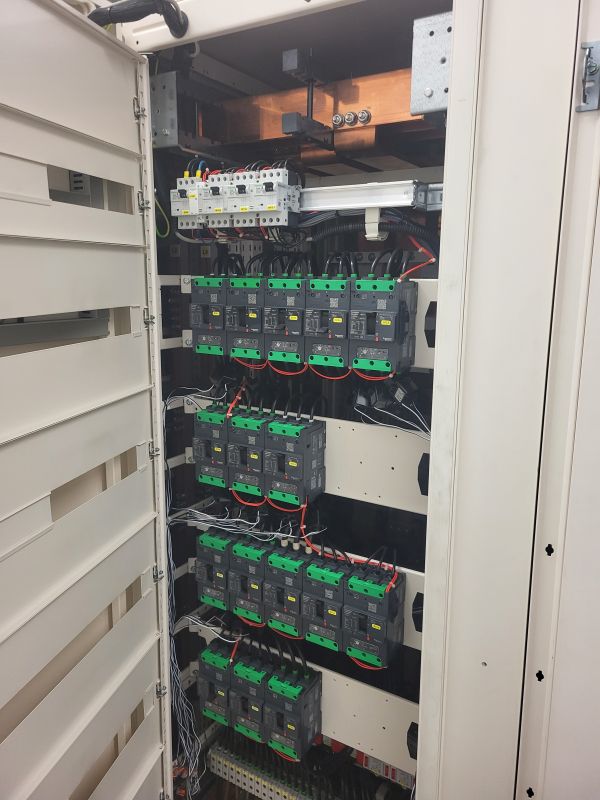
A large proportion of the meters were concentrated in one location.
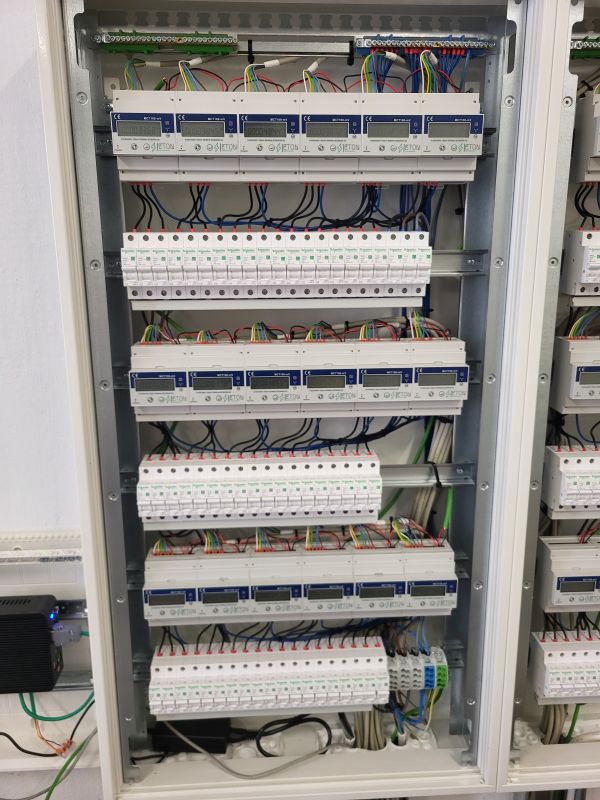
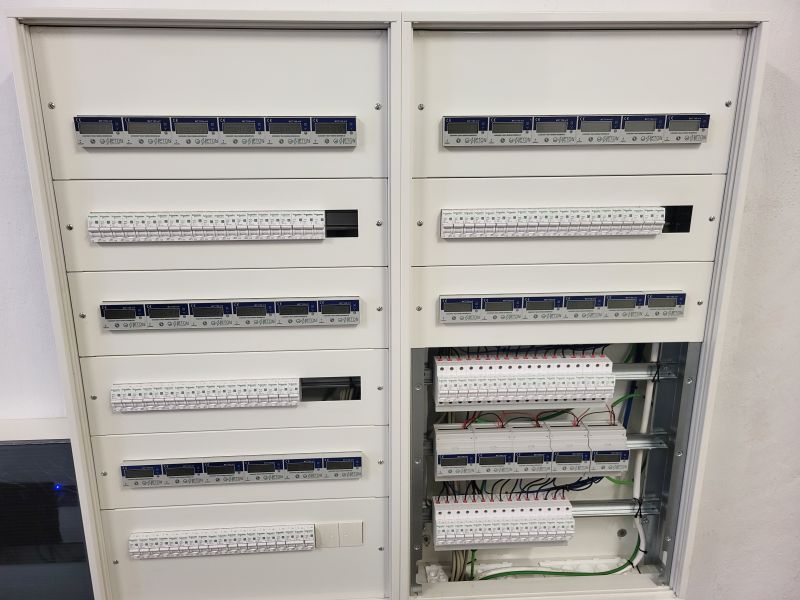
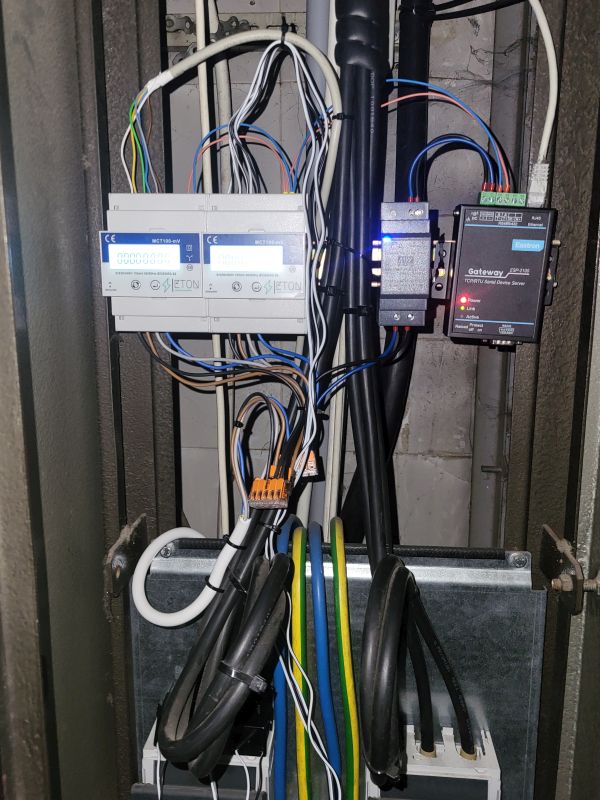
The 0.4 kV main distribution board ultimately contained 56 metering points, while the remaining meters were located at different points throughout the building.
This created two different technical challenges.
Within the main distribution board, a large number of devices had to be consistently:
- installed;
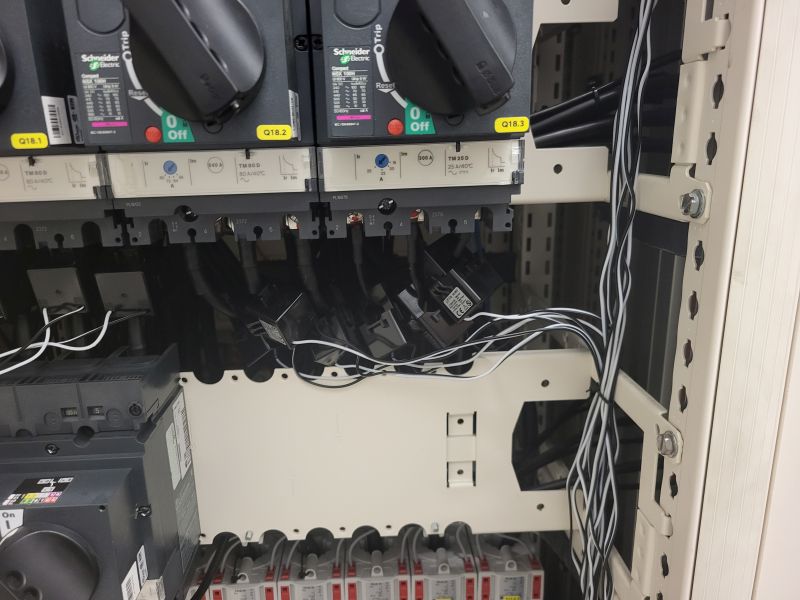
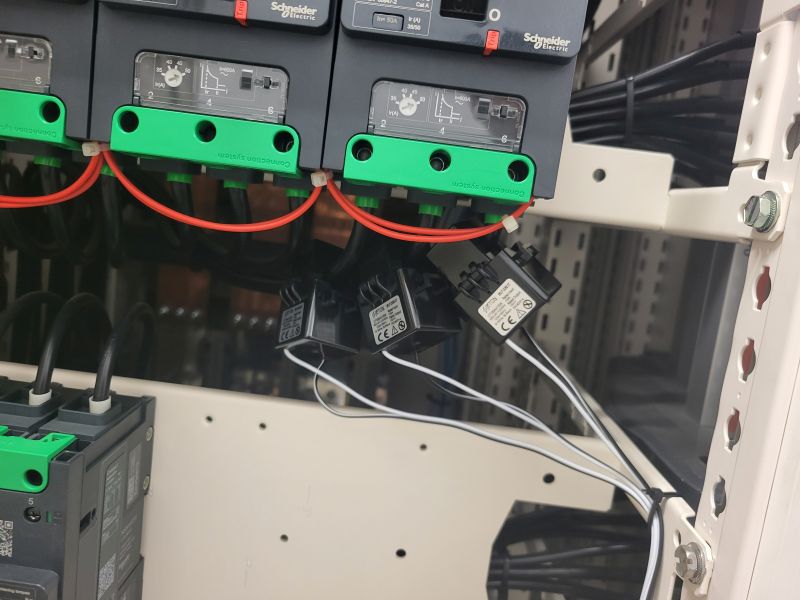
- connected to current transformers;
- connected to the communication network;
- addressed;
- and configured.
For meters located elsewhere in the building, communication had to be extended so that they could also become part of the same central system.
Existing tenant meters also had to be integrated
At two locations, existing tenant meters were replaced with remotely readable meters.
This allowed their data to be collected automatically within the same system.
The project therefore involved three different types of work:
- integration of existing meters;
- implementation of new metering points;
- and replacement of existing meters with remotely readable devices.
From the perspective of the final system, however, all 60 metering points need to operate in exactly the same way: as parts of one integrated measurement infrastructure.
New metering points installed without shutdown
For the newly established metering points, an important requirement was to minimise disruption to the hotel’s operation.
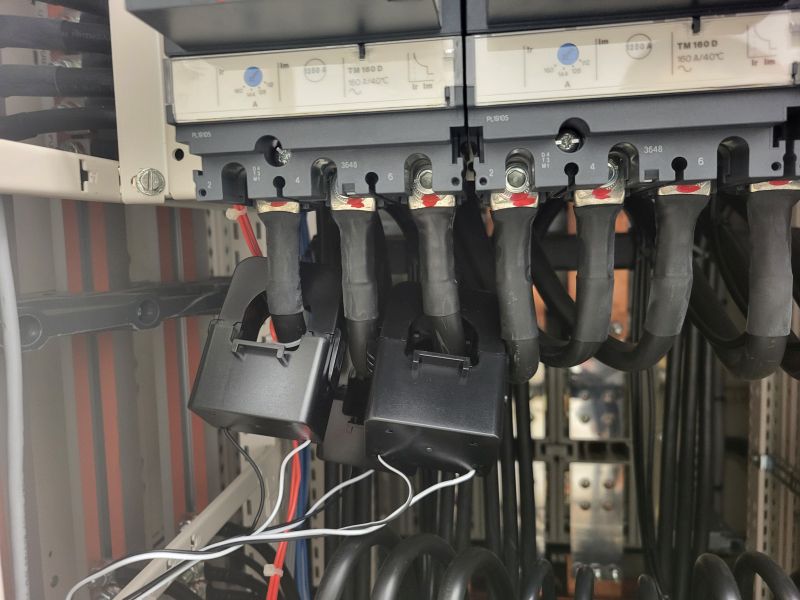
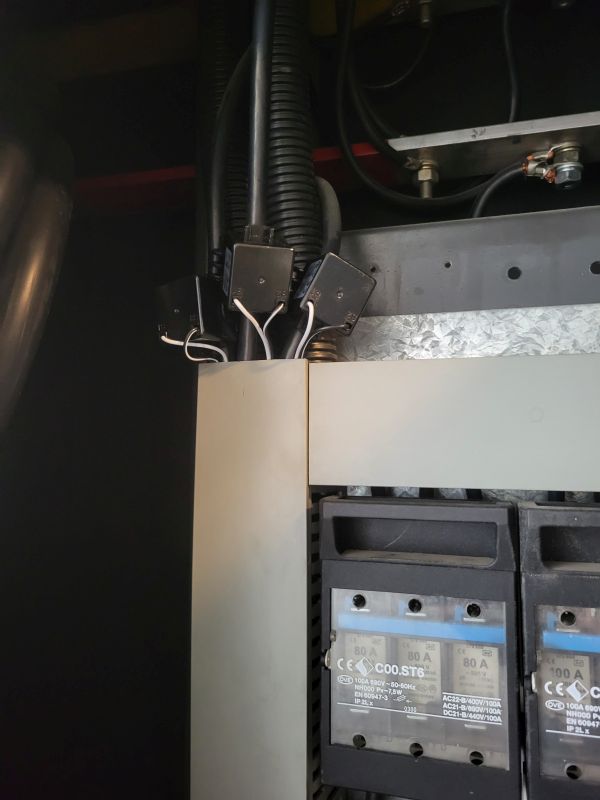
Split-core current transformers allowed much of the new measurement infrastructure to be installed while the electrical system remained in operation.
This is particularly valuable in a hotel environment.
An electrical shutdown may affect:
- guest rooms and public areas;
- building services;
- kitchen equipment;
- lifts;
- lighting;
- and numerous supporting systems.
Installing a metering system should not create a larger operational problem than the measurement itself is intended to solve.
The client went beyond minimum compliance
The client did not limit the system to the minimum metering points required by regulation.
Additional measurement was installed on significant loads and electrical distribution points where data could provide useful information for energy management and facility operation.
This is an important distinction.
A compliance-driven system measures what must be measured.
A well-designed energy-management system also measures what is worth understanding.
Starting with 15-minute consumption data
At commissioning, the data collection system was configured primarily for 15-minute electricity consumption data.
This provides a basis for:
- analysing consumption profiles;
- comparing major loads;
- identifying peak demand;
- investigating consumption outside normal operating periods;
- and identifying potential energy-efficiency opportunities.
The installed measurement hardware, however, can provide significantly more information.
The infrastructure provides room for future analysis
With the appropriate configuration, the installed meters can also provide parameters including:
- phase currents;
- voltages;
- active power;
- reactive power and energy;
- and other electrical characteristics.
These values can also be collected at significantly shorter intervals than the current 15-minute energy data.
The same infrastructure can therefore support more detailed energy and operational analysis in the future without requiring the entire metering system to be replaced.
Equipment used
The project included:
- 37 ETON MCT100-mV electricity meters
- 2 WAGO 879-3001 electricity meters
- 99 ETON CT 100 mV / 120 A split-core current transformers
- 12 ETON CT 100 mV / 400 A split-core current transformers
- 1 ETON DCT100 data collector
- 2 ETON Modbus/TCP IP converters
Data collection: ETON Energy Management
What does this project demonstrate?
Upgrading the metering system of an existing facility does not necessarily mean replacing everything that is already there.
Often, a better solution is to:
- retain usable existing infrastructure;
- expand it with new measurement points;
- create a consistent communication network;
- and bring all measurement data into one central environment.
In this project, 21 existing meters and 39 newly installed or replaced meters were combined into one 60-point metering system.
The challenge was not to operate 60 individual meters.
It was to make all 60 measurement points operate as parts of one system.