The client’s original request sounded simple:
keep the entire house running during a power outage.
Many things are technically possible. The more important question is whether they can be achieved at a reasonable cost.
A residential client approached OMS24 Zrt. to improve the resilience of the property’s electricity supply by introducing battery-backed power.
The initial idea was to provide backup power for the entire property.
After analysing electricity consumption data and expected loads, however, we concluded that a much better cost-to-benefit ratio could be achieved by supplying only the circuits that were genuinely important during a grid outage.
Every additional load that needs to remain operational during a power outage increases:
The first step was therefore to identify the circuits that genuinely needed to remain available during an outage.
The system was then designed around actual requirements rather than maximum possible capacity.
This is an important principle for energy projects in general:
the largest system is not necessarily the best system. The right system is the one sized for the actual requirement.
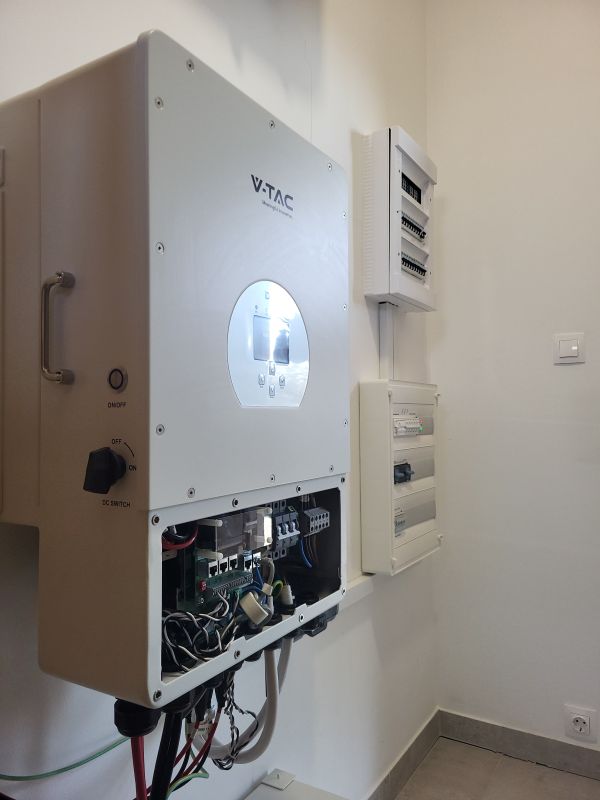
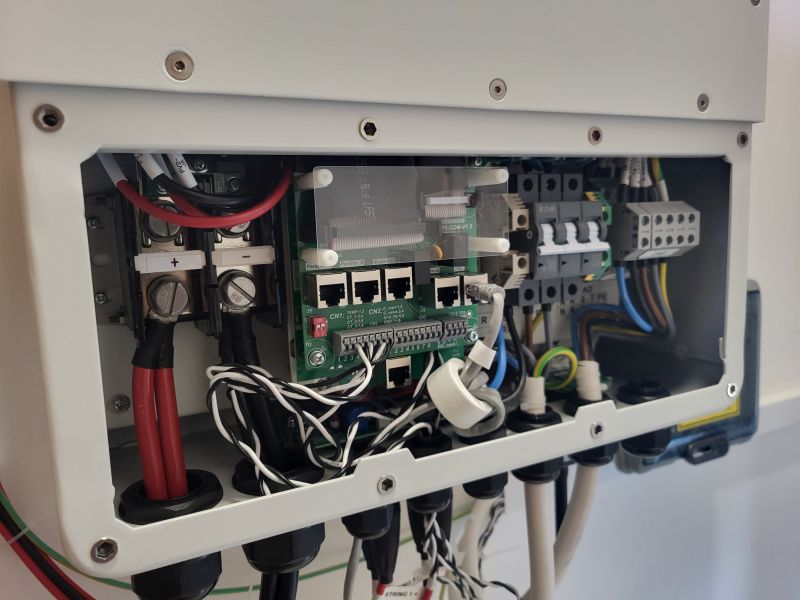
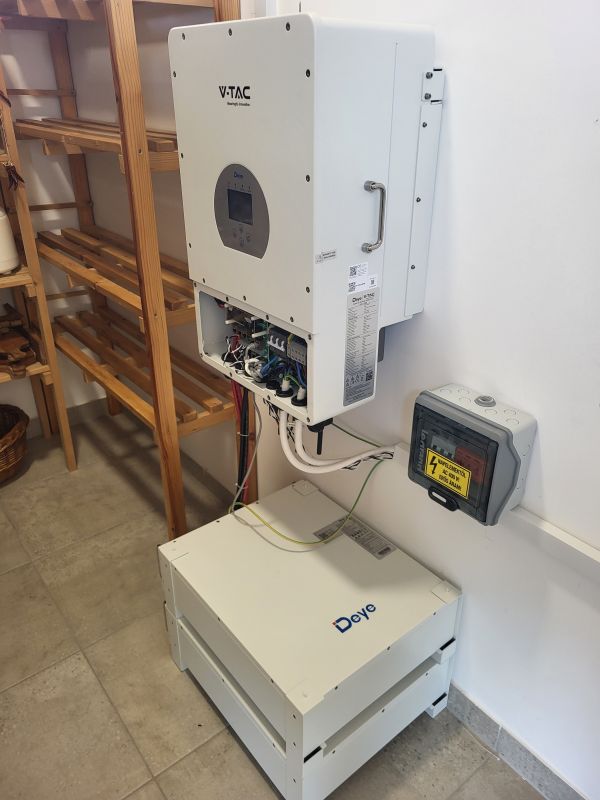
The core of the solution is an 8 kW Deye hybrid inverter.
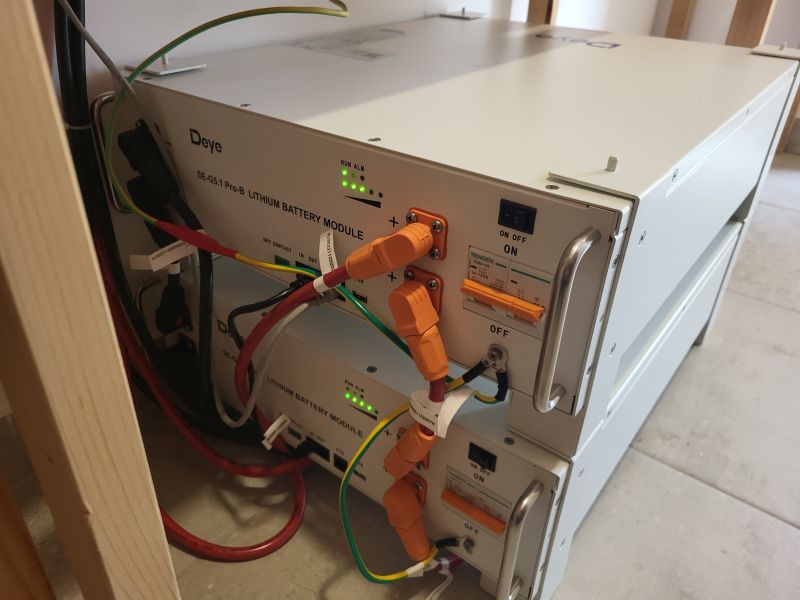
Two Deye batteries provide approximately 10 kWh of nominal energy storage capacity.
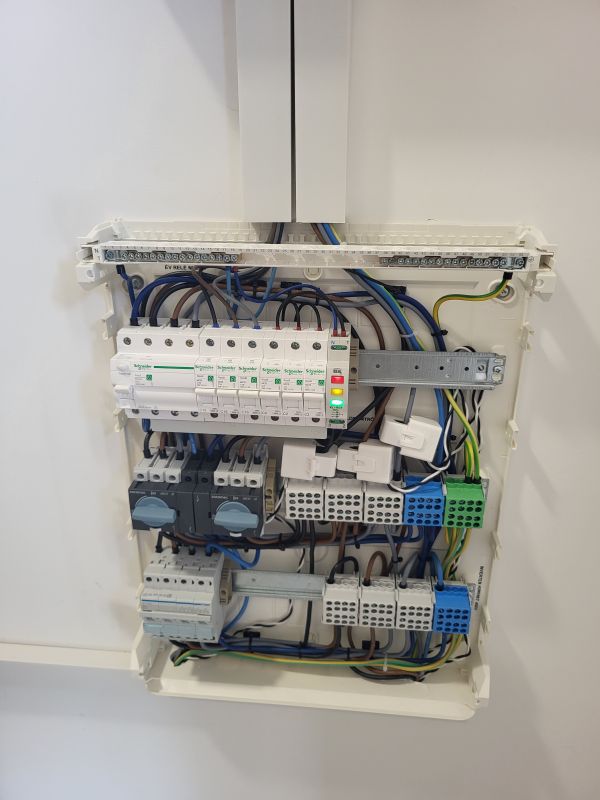
Under normal conditions, the selected circuits are supplied from the grid. If the grid supply fails, the system automatically switches them to battery-backed operation.
After commissioning, we did not simply assume that the backup function would work as expected.
We tested it.
During simulated grid outages, the inverter switched from grid supply to battery operation within a few milliseconds.
The transfer was fast enough that no visible flicker could be observed in the lighting.
This is particularly valuable for loads where even a very short interruption could cause inconvenience or disrupt normal operation.
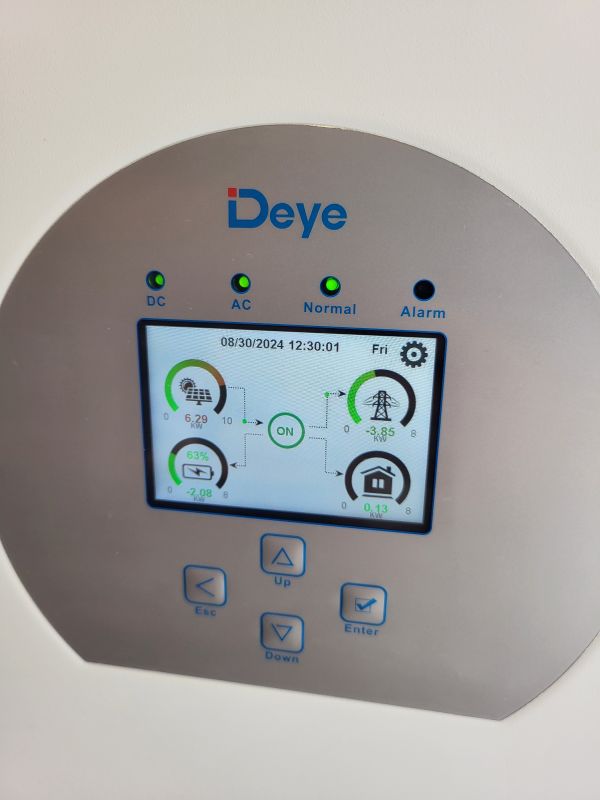
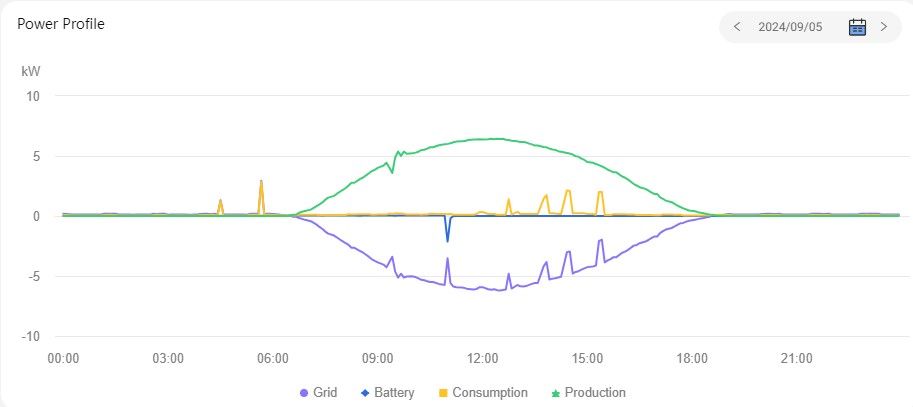
The hybrid inverter includes a local display, while system operation can also be monitored through a mobile application.
The app provides remote access to key operating information and system settings.
Depending on the configured functions, the user can monitor information such as:
The backup power system is therefore not simply a box on the wall.
Its operation can be monitored and understood.
The main components of the system are:
Combined nominal battery storage capacity is approximately 10 kWh.
When considering battery storage, it is easy to begin with the assumption that everything in a property should continue operating exactly as normal during a grid outage.
In many cases, however, that would require an unnecessarily large and expensive system.
A better approach is to determine first:
In this project, the original whole-house concept was transformed into a targeted backup solution using an 8 kW hybrid inverter and approximately 10 kWh of battery storage.
The objective was not to keep everything running during an outage.
It was to make sure that what really matters keeps working.