An electrical system refurbishment is a good opportunity not only to improve how electricity is distributed, but also to gain a better understanding of where and how it is being used.
During the refurbishment of a hotel’s electrical network, the client decided to introduce separate metering for several important outgoing circuits.
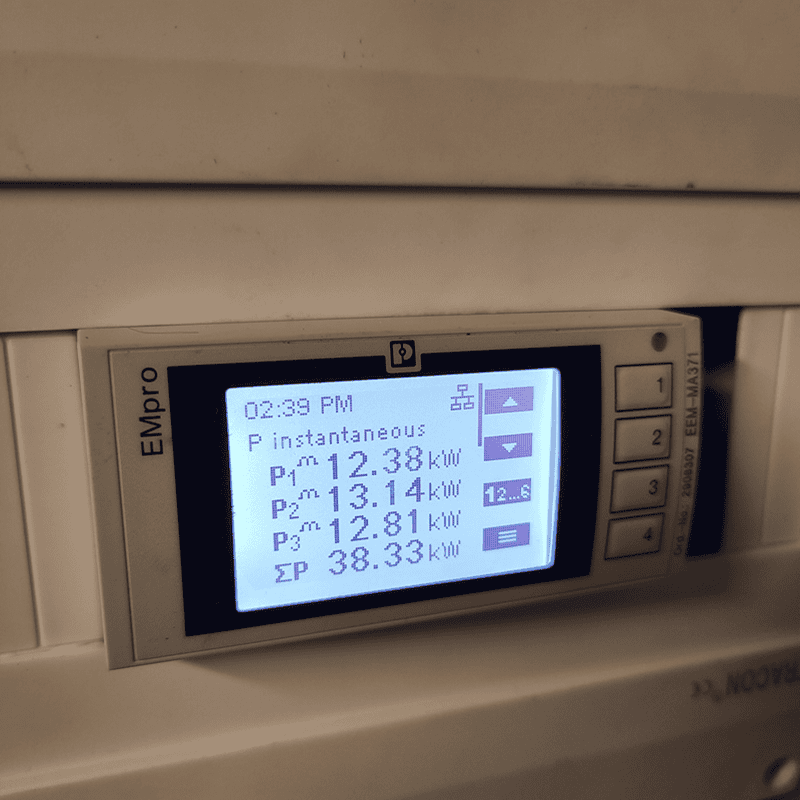
OMS24 Zrt. implemented eight three-phase submetering points as part of the project.
The client chose to go beyond the minimum regulatory requirements and install measurement on other significant loads and electrical distribution points where consumption data could provide useful information for future energy management and facility operation.
Selecting more than just a meter
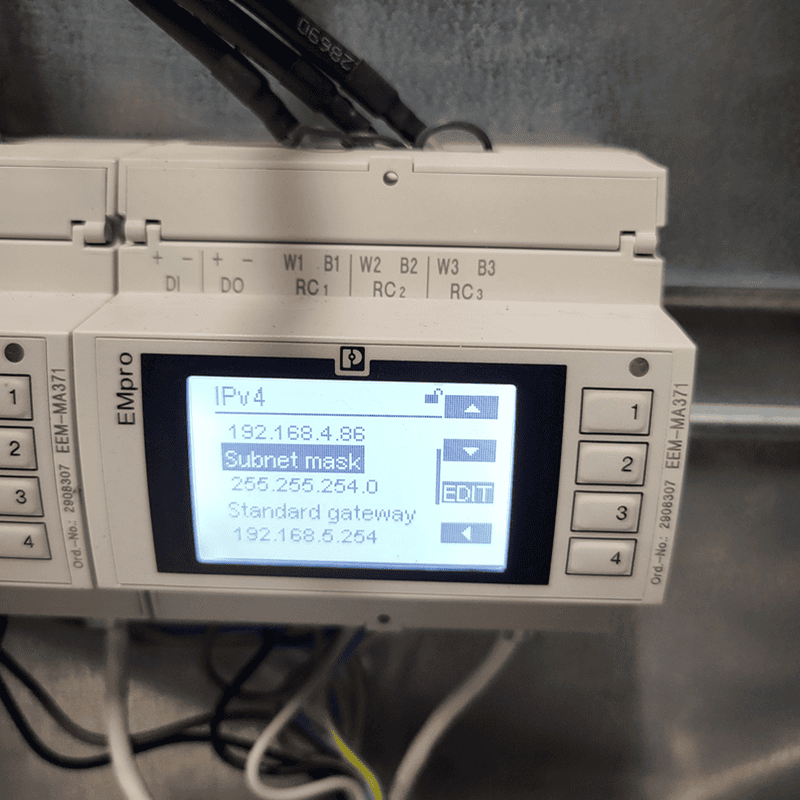
One of the key requirements was that measurement data should be available directly through the IP network.
For this reason, meters with native IP-based communication capability were selected, eliminating the need for separate communication converters.
This approach:
- reduces the number of additional communication devices;
- simplifies integration with the data collection system;
- and provides a clearer architecture for future operation and maintenance.
What if the final metering points are not yet known?
One of the interesting technical challenges of the project was that, during the initial design stage, the client could not yet specify exactly which outgoing circuits would ultimately require measurement.
The current measurement solution therefore had to be flexible enough to accommodate different conductor sizes and installation arrangements.
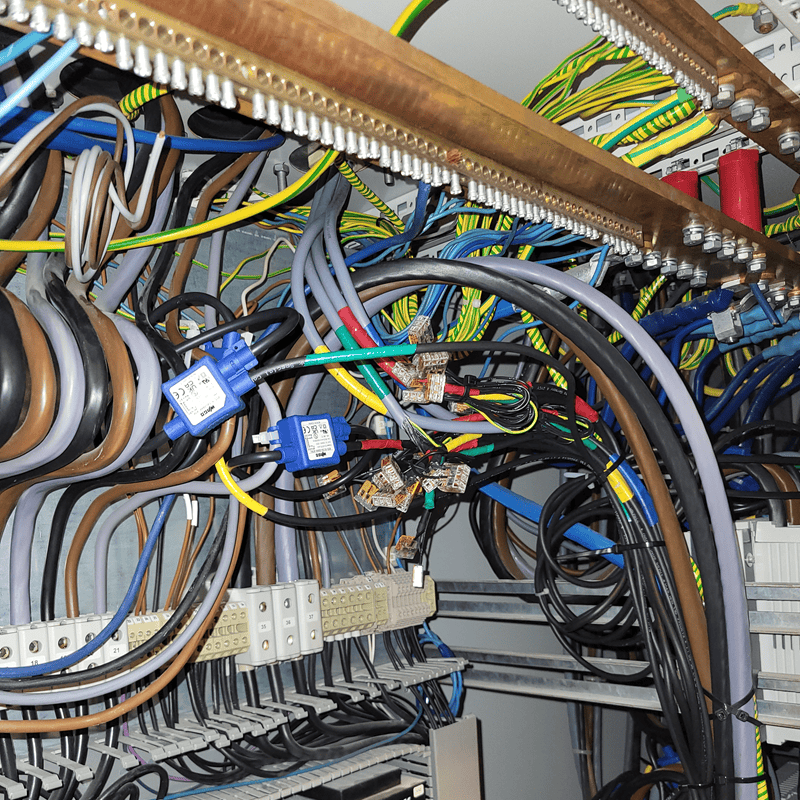
For this reason, Rogowski coils were selected for current measurement.
One of their important advantages is that they can be installed around existing conductors without disconnecting them, making them particularly suitable for retrofitting measurement into existing electrical systems.
Installation without interrupting operation
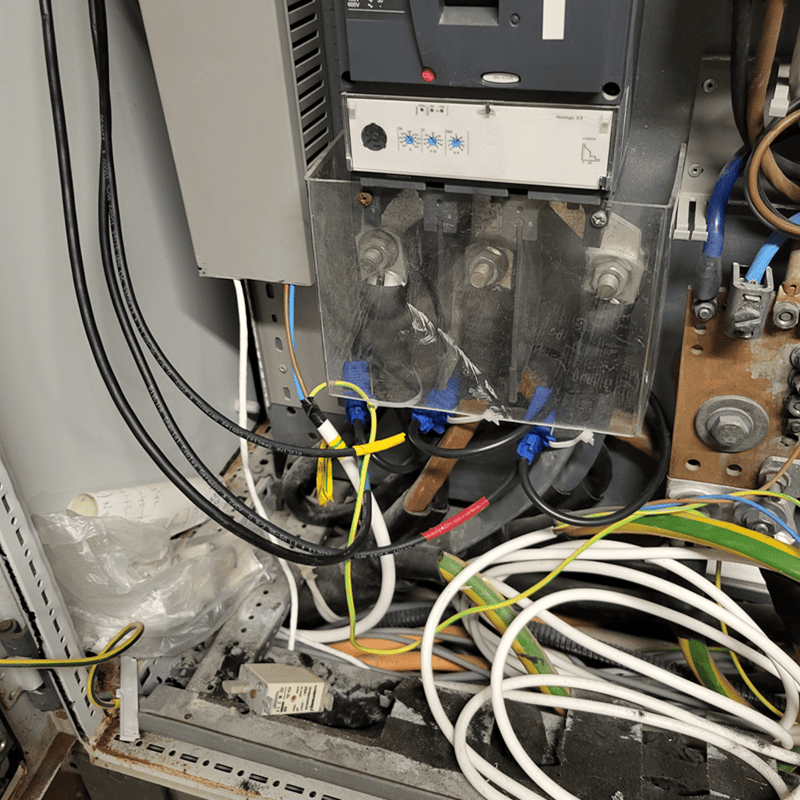
At the newly established metering points, the measurement equipment could be installed without shutting down the electrical system.
The Rogowski-coil-based measurement solution played an important role in making this possible, as the sensors could be fitted without disconnecting the existing conductors.
For a hotel, this is particularly valuable.
An electrical shutdown may affect far more than the electrical installation itself. It can disrupt guest areas, rooms, building services, kitchens, lifts and numerous other operations.
If a measurement system can be installed without disrupting normal operation, that is a significant advantage in itself.
Starting with 15-minute consumption data
At launch, the data collection system was configured primarily to record 15-minute electricity consumption data.
This already makes it possible to:
- monitor consumption across individual areas;
- compare load profiles;
- identify peak demand;
- investigate consumption outside normal operating periods;
- and search for opportunities to improve energy efficiency.
The installed metering hardware, however, is capable of much more.
The hardware can already do more than we currently use
The installed meters are not limited to reporting energy consumption.
With the appropriate data collection configuration, they can also provide electrical parameters including:
- phase currents;
- voltages;
- active power;
- reactive power and energy;
- and other electrical network parameters.
These values can also be collected at much shorter intervals than the current 15-minute consumption data.
This is important because the measurement infrastructure does not necessarily have to be replaced if the client later decides to introduce more detailed energy or operational analysis.
The system was therefore designed not only for the current requirement, but also with future development in mind.
Equipment used
The system includes:
- 8 Phoenix Contact EEM-MA371 electricity meters
- 24 WAGO Rogowski coils
Data collection: ETON Energy Management
What does this project demonstrate?
When designing a submetering system, it is easy to focus only on what needs to be measured today.
An equally important question is:
what might we want to learn from the same system one or two years from now?
The solution implemented in this project:
- meets the current metering requirements;
- provides direct IP communication;
- can be flexibly applied to different outgoing circuits;
- allowed new metering points to be installed without shutdown;
- and provides a foundation for more detailed electrical analysis in the future.
A well-designed submetering system does more than show how much energy is being consumed today.
It creates a measurement infrastructure that can tell us much more about how the facility operates in the future.